You print 2,000 flyers with a QR code. The code points to a landing page. Three weeks later, the marketing team rebuilds the landing page at a new URL. The flyers are still in circulation. The QR code still points to the old address. Twelve hundred people scan a broken link before someone notices.
That scenario doesn't happen with a dynamic QR code. You update the destination in a dashboard. The physical code doesn't change. Every scan from that point forward reaches the new URL — including all 1,200 flyers already in the field.
Static vs. dynamic: the technical difference
A static QR code encodes the destination directly. Scan it and your phone reads the URL from the code itself. The QR code is a self-contained message — the data lives in the pixel pattern.
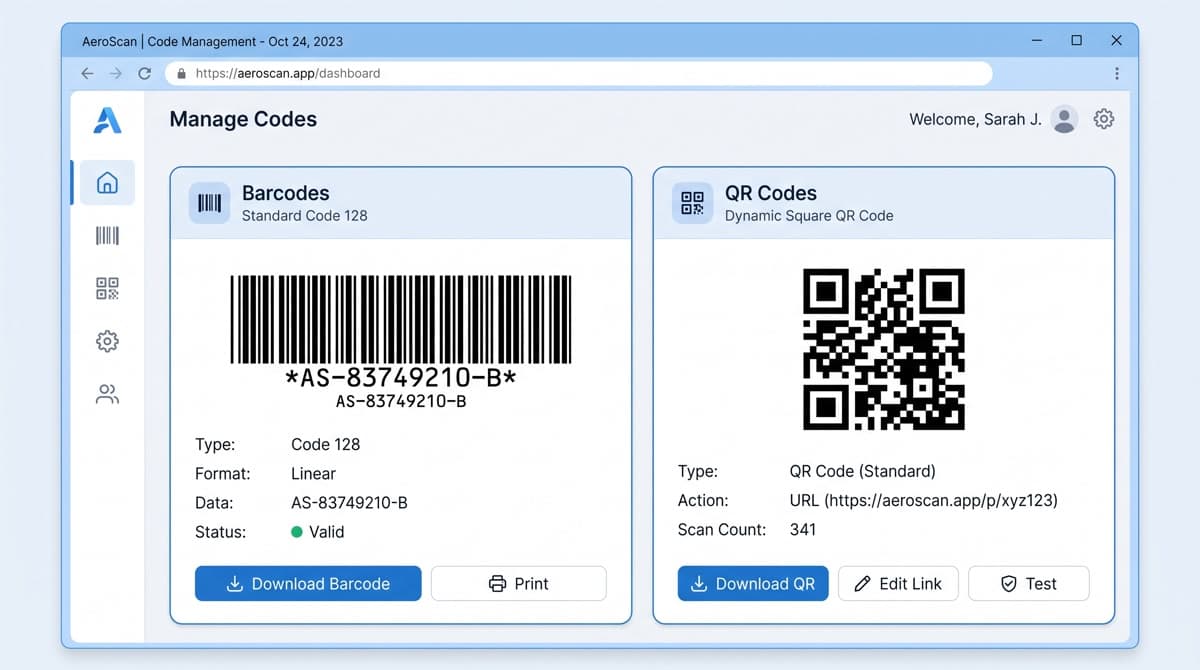
A dynamic QR code encodes a short redirect URL. Scan it and your phone hits that redirect, which immediately forwards you to the real destination. The redirect lives on a server. You control the server. You can change where the redirect points without touching the printed code.
That redirect also logs the scan. Which device type. Which city. What time. Whether it was scanned from iOS or Android. That data is the second reason to pay for a dynamic QR code subscription — not just editability, but visibility into whether your codes are actually being used.
What a subscription unlocks
A free QR code generator produces static codes. The image is yours. The destination is fixed. That's the complete product.
A dynamic QR code subscription provides a service that runs continuously after the code is printed. The subscription pays for:
- URL editingChange the destination of any dynamic code at any time — once or a thousand times. No reprint required.
- Scan analyticsSee total scans, unique scans, scan timeline, geographic distribution, and device breakdown for each code and across campaigns.
- Code organizationGroup codes by campaign, product line, or location. Find any code by name without scrolling through a flat list.
- Custom brandingAdd a logo to the center of the QR code. Customize colors to match your brand. Add a call-to-action frame around the code.
- Code health monitoringThe platform tracks whether each code's destination is live. If the linked page returns an error, you can see it in the dashboard before your customers do.
Use cases where dynamic codes pay for themselves
Restaurant menus
Table tents and menu boards with QR codes need to stay current as menu items change. A restaurant that prints static QR codes reorders table tents every time the menu changes. A restaurant on a dynamic QR subscription edits the menu link in a dashboard — the table tents from six months ago still work.
Product packaging
A QR code on a product box might link to setup instructions, a warranty registration page, a product video, or a customer support portal. All of those URLs change over product lifecycle. A dynamic code means the URL on the box is correct for every customer, regardless of when the box was manufactured.
Event materials
Conference badges, signage, and printed programs often go to print before the schedule is finalized. Dynamic QR codes let you update session links, venue maps, and speaker bios up until — and after — the event starts, without reprinting anything.
Marketing campaigns
Campaign landing pages get optimized. URLs get restructured. Promotions expire and redirect to new offers. A QR code on outdoor advertising, direct mail, or in-store signage that points to a static URL is fixed for the life of that print run — which can be months. A dynamic code lets the campaign evolve without rerunning the creative.
When dynamic codes aren't necessary
Not every QR code needs to be dynamic. If you're generating a QR code for a Wi-Fi network, a one-time event registration link, or a business card — and you don't need to track scan volume — a static code is sufficient. Free generators handle these cases perfectly well.
The test is simple: will the URL on this code ever need to change? And do you need to know how many times it's scanned? If either answer is yes, dynamic is the right choice.
What to evaluate in a dynamic QR code subscription
- Dynamic code limit per tier: some platforms charge per code; others cap by tier. Verify the limit covers your usage without overage fees.
- Analytics retention: how long does scan history stay available? 30 days is not useful for annual campaign comparisons.
- Custom domains: professional plans should let you serve redirects from your own domain rather than the platform's short URL service.
- Code persistence on cancellation: verify what happens to dynamic codes if you downgrade or cancel. The platform should notify you clearly, not just silently break redirects.
The Advanced plan on MyQR includes 100 dynamic QR codes at $26.99/month — each with full scan analytics, editable destinations, and custom branding. The Professional plan scales to 500 dynamic codes with custom domains and A/B testing. Both plans include barcode generation, so you're not paying a separate subscription for inventory work.
Create your first dynamic QR code
Free for your first static codes. Subscribe to unlock dynamic codes, analytics, and bulk creation.
Open the QR Generator